Sunday, November 15, 2015

Observations Pt. VIII

Chairs
To be found in practically every building, chairs are some of the most normal things to be found. Rarely do we stop and think about what an odd shape and what expectations chairs have for us. Why have we "chosen" to sit in a certain shape? Why isn't this idea of "sitting" a different shape? Do we make the stair-like shape because of our environment and the expectations that chairs hold, or is it a biologically decided shape?

Groupy
As much as teenagers complain about cliques, they form them. As much as they hate stereotypes they become them. For some reason, adolescents have a tendency to clump, grouping towards those with a common interest and beginning to identify themselves with it, changing who they are. They allow this title to begin to define them and their actions. But why does this happen, where does this clumpy-ness come from? Why does this happen, despite the claims of dislike of it? And why do people allow such groups to define them or be an explanation for why they do something?

Expectations
The expectations and ideas of what it is to be a teenager, and what comes with that, differs greatly per country, one of which being employment. In some foreign countries, it is expected that by the time you are 15 or so you have some sort of part-time job, while here this is not necessarily the case. Why is that so? Why are there these expectations of employment in other countries but not here, in a country that has high college tuition and believes in personal responsibility? Is it because of the history of a country that this is established? Or does it have to do with time and how teenagers nowadays choose to spend it?

Sunday, November 1, 2015

Observations Pt. VII


Flowers
White tablecloth, shiny silverware, a vase filled with flowers. Go to a fancy restaurant or special event and you're bound to see these colorful plants on the table. Why do we do this though? Why do we kill plants and put them in the center of a table for all to admire? We might as well cut off the heads of animals, attach some machines to keep them from "wilting" for a few days, and place them as center pieces at a fancy dinner. Animals are beautiful, come from the natural world, have life, are colorful, and are diverse as well! Yet, for some reason, this doesn't sound quite as appetizing. But why then, I may as well ask, is it ok to stuff animal heads and hang them from walls?


Buttons
In a society as technologically and technically advanced as we live in, why is it that some of our most daily actions are governed by "old-fashioned" ways. Take, for instance, jeans. Most still are closed using a button and buttonhole, something invented hundreds of years ago. Yet we still use it, and don't even stop to think about how simple and basic it is compared to everything else we encounter these days. Aren't there more effective, more modern ways to close jeans, like there are continuos improvements made to the iPad? It is almost rare to find something that hasn't been updated much since it was invented—this is definitely one of those few, rare things.

Disappearing Differences
The countries in which social media seems to be used most are all western, democratic countries. The rich, first-world countries, where individualism, capitalism, and personal choice are prized—they're the ones who have access to the internet, take selfies, worry about their Instagram feeds, shop online, laugh at memes. And slowly, the youth culture of the numerous countries in the western world become more and more alike, all being influenced by the same internet posts. These democratic peoples are coming closer and closer to all looking and acting in the same way. Isn't what a communist society hopes to look like—everyone the same, everyone equal?

Sunday, October 18, 2015

Observations Pt. VI

The iPad
A common object at Monte Vista, the iPad is used throughout the school  as a useful tool for learning. It is promoted by the school, paper (supposedly) has become extinct. Supposedly. The truth is, the majority of classes still use paper for something, sometime. And secretly, at this iPad-only school, almost everyone has a certain dislike of the iPad. "Have you ever seen this? It's...paper. Don't tell anyone we're using it." teachers whisper, as students iGnore esco and buy hardback, real-life copies of their textbooks, and girls hang up post-it notes of encouragement on bathroom mirrors. Why do so many have this aversion, and why does no one speak out about the truth? Is there a certain addictive quality to the iPad? Is there just enough merit to it for many for a protest to begin? Or are students and teachers afraid to "hurt" this iMage of a school where everyone is has access to and is in love with modern technology? And why, for that matter, has research not been done recently by the school to evaluate students' opinions on learning with such technological advancements? What is it that is keeping this minor, yet iNteresting "iSsue" silent among users?

Prepare Yourself For The Future
Whenever I was given a "hard" test in elementary school, I was told "We're preparing you for middle school." In middle school it wasn't any different. "We're preparing you for high school." And now in high school, anytime I have a research paper, I'm told "We're just preparing you for college." Preparation is good, but only to a certain extent. It quickly can become a worry that if students are not taught this now, they'll fail next year, rather than something new and interesting to learn. Matthew 6:34 says, "Therefore do not worry about tomorrow, for tomorrow will worry about itself. Each day has enough trouble of its own." Why don't many teachers let students be in the grade they are and work at their level, living in the moment, rather than constantly looking to prepare for the future? And furthermore, why do we as a society constantly live towards moments, rather than in them? Four-year-olds can't wait to be five, elementary schoolers wish to be in high school, high school seniors just want to leave, college graduates are waiting till the day they get offered that one dream job...Is this something that is simply part of being human, or is this a bad habit that we continue to teach the younger generations through our actions?

Watch Out, You Might Get Mugged
Tea in a teacup, coffee in a mug, wine in a wineglass, pop (or "soda" to make this West Coast Appropriate) in a glass—certain drinks have been given specific cups to use when drinking them. But why has this rule been established by us? Why isn't it acceptable for me to drink my lemonade in a beautiful teacup, or my coffee in a wineglass for all to see? And who came up with these norms, for what reason? Do carbonated drinks taste that much better in a tall glass? Strange isn't it? I can already see you becoming glass-y-eyed at the mere thought of having root beer in a shot glass. Wait, why don't we do that actually? It'd limit sugar intake like shot glasses "limit" alcohol intake! Sorry, getting a cup-le of steps ahead of myself here. Cheers!

Monday, October 5, 2015

Observations Pt. V

Twin Thursday
The day to designated to dress up to look exactly like your friend is a day of hilarious duos. And trios. And quads. And quintets. And numbers of people for which I have no idea what it'd be called. And that is a bit strange. Why do we assume it to be acceptable to dress up exactly the same as more than one other person on twin day? It isn't quadruplet+ day! Yet for some reason, when we hear "twin" we automatically deem it completely normal to exceed the limit it presents. Why is that a "rule" that many do not follow?

School Spirit
The concept of school spirit is a thing unknown in much of the world, yet is almost hard to imagine for many of us. Isn't the goal of all teachers and leaders at school to get us excited to support our school, its sports teams, mascot, and the community? To wear the school colors on game days, dress up for homecoming, and shout with much excitement at the pep rallies? You come to identify yourself with your school and school is where you spend almost the entire day. At many schools on the other side of the globe though, this idea is strange. A mascot for a school? School colors? Pep rallies? Cheering for your class? Dressing up silly for a week to get "points"? Why? What is the purpose of that? When would there even be time made for something of the sort?

Wall Hangings

As great as it is to be able to plaster your bedroom walls with posters and pictures and quotes, it is really quite strange. Why do we put things on our walls, not on our floors, ceilings, or any other part of the room? Who came up with such an idea? Why would we want to see the very same thing every time we enter a room? Ranging from a thin piece of paper to a thick wooden frame to an artsy bicycle seat, there is not much that isn't considered for a wall hanging somewhere in the world. Does this say something about us humans?

Tuesday, September 29, 2015

Observations Pt. IV


The Color of Food
Take a moment and observe the food you eat. An orange? Probably spray paint. "Whole wheat" bread? Molasses to make it look that healthy. Cherry-flavored jello? No one would eat it if it weren't red. We have certain unspoken expectations of the color of food, to the extent that if something isn't naturally the "right" color, it must be altered to fit the mold. Why do we assume these colors to be "right" though? Are we discriminating by color? If we suddenly change the color, add food coloring to our pancakes, don't use any color for the Christmas cookies, people suddenly become distrustful of the food. How can we hope to be capable of not judging others by what they look like if we can't even do that with our food?

Curbs
Step up, step down, don't trip. America is filled with them, curbs. Who came up with the concept? Why? And how did they come to exist all over the world? They are so normal that we don't even really notice them unless we're parallel parking, and even then we don't take a minute to wonder. Why do they only line certain roads? Why do they have that rounded shape? How do we know that they secretly aren't being used for a confidential government purpose?

The Frisbee
Frisbees. Who came up with that? A plate, flying through the air. Did it stem from a food fight? It is strange how we may see it as normal to throw a plate like a disc, but not to throw our cups like balls, our forks like darts, or our napkins like paper airplanes. Yet somehow, it happened. Manufacturers took on the challenge and started producing the plates that aren't plates, resulting in nation (and maybe even world) wide knowledge and skill regarding the game of frisbee. How can we reprimand children for throwing food while teaching them to throw an item resembling a dinner plate?

Monday, September 14, 2015

Observations Pt. III

Sports at School
Football, swimming, golf, track—there are many options when it comes to playing sports at school. But why is it that sports are connected with school? Why is free time connected to  a student's "work?" Unless you work for Google or are the manager of a fitness center, your job isn't going to present you with the choice to join a sports team! So why is it that in the time of education it is connected? Some might guess that it is because "school" comes from the Latin word for "leisure." However, many European countries have the same word for or a variation of the word "school" as well, yet they do not have sports teams offered by schools. How is it that this phenomena is found in the United States, but not in Europe (and in other continents)?

The Grass is Always Greener...
For some reason, most people I've ever met have idealistic views of what the other side of the world is like. As strange as it may seem, Europeans dream of visiting L.A. in the same way that Americans dream of visiting Europe. We live a few hours from Hollywood, they a few hours from Paris.
"Oh it must be so romantic there!" we cry, "Do you see celebrities every day?!" they yelp, not realizing that the other side of the world is still the world too. Cities are dirty, people hide away, bombs drop, traffic jams,  cars pollute the air, homeless people sit on street corners. Why do we tend to have such a dreamy view of other places? Is this because we hear stories from tourist friends who saw what they wished to see? Do we value maintaining that perfection over actually traveling and becoming acquainted with a country?
Despite our idealism though, with this drought, the grass definitely is greener on the other side.

Fire!
 The fire alarm goes off and we walk out of the classroom, recognizing the sound of alarm. Why do we associate this sound with emergencies though? Who decided that this particular sound would signal that something was wrong? There are so many sounds in the world, shrill sounds, loud sounds, beeping sounds, yet somehow for some reason someone chose these certain special sounds. If we can chose our own alarm clock sound, why can't we chose our own fire alarm sounds?

Tuesday, September 8, 2015

Observations Pt. II

Power Lines
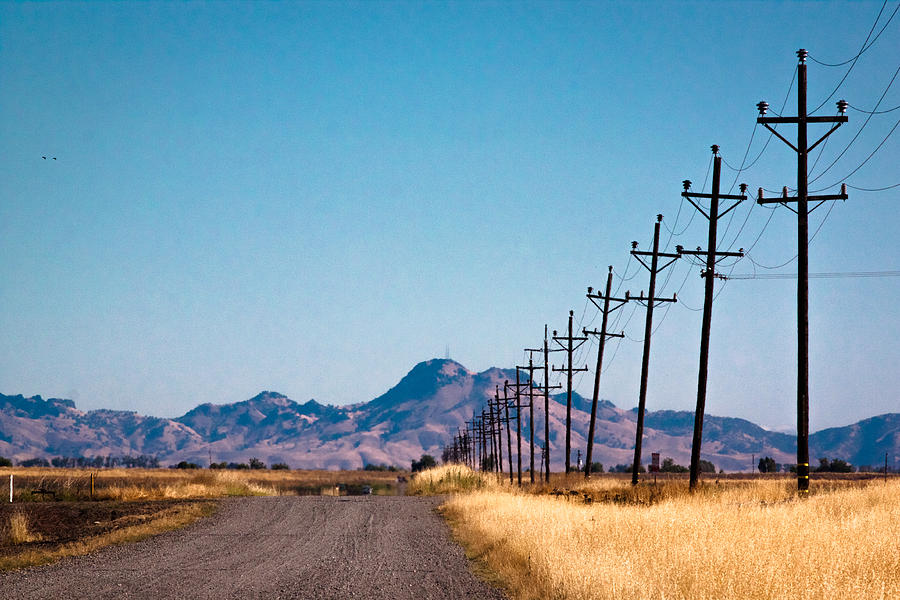
Every single day I drive by them—power lines. Wires connecting to tall wooden poles, strung across roads, houses, yards, fields. How often do I actually notice them? At the most, once a week. They are so normal, so completely ordinary that they come to blend in with the surroundings. The only time anyone notices them is, well, when someone crash into one and forces the whole neighborhood to eat their ice cream before it melts. These leafless trees are not as commonplace as they might seem nowadays though.
More and more of them are being replaced with underground lines so that we can blame the groundhogs rather than mankind for the obesity epidemic. In many suburban neighborhoods this is the case, as well as in a number of progressive foreign countries, such as the Netherlands. For myself, returning to the States caused me to notice them again as they seemed strange and a bit old-fashioned all of a sudden. Why don't we all stop and think about power lines once in a while? Admire their rustic "beauty"?  Imagine ourselves tightrope walking across them? Or remember to thank the PG&E workers next time we see them fixing one?


Alone
"Person" plus "alone" equals "lonely". At least, according to "society," whatever that may be. But why do we believe this equation to be true? According to Sir Google, the definition of "alone" is "having no one else present; on one's own." His definition "lonely" on the other hand is "sad because one has no friends or company." This shows that being "lonely" is actually but a subcategory of "alone." By this logic, I'd be a whale, simply because I am a mammal. Does this mean we are afraid to be judged for being alone simply because someone else is bad at math? Why isn't this something we strive to fix? Being alone provides an opportunity for deep thought, seeing the world, using all five senses, creativity, new ideas, prayer, rest, inside jokes with yourself, and so much more. How come, in this culture where "innovative thinking" is so prized, we don't encourage being alone?

Grinmacing
"Say cheese!" my friend's mom yells as we pose for a picture at her graduation party. The poets may have been mysteriously silent on the subject of cheese, but moms with cameras sure haven't! Why do we even say "cheese" to smile for a picture? Who thought of that? Why not say "beans" or something of the sort? And why do we smile for pictures anyway? If you ever come across a picture from 19th century you'll notice that no one is showing off his or her pearly-whites. Solemn and staring straight ahead, it sometimes confuses us. We wonder why they didn't smile back then. But why don't we turn it around? Why do we smile when posing for pictures nowadays? Do we value our masks more than our honesty? Why do we hide the grimace with a grin?